Central banks’ dilemma: inflation or growth?
Central banks may have to keep interest rates high for longer than anyone expected a few months ago. Until recently, falling inflation meant rates were slowly heading down. High energy prices, stubborn inflation and shaky growth have changed that story.
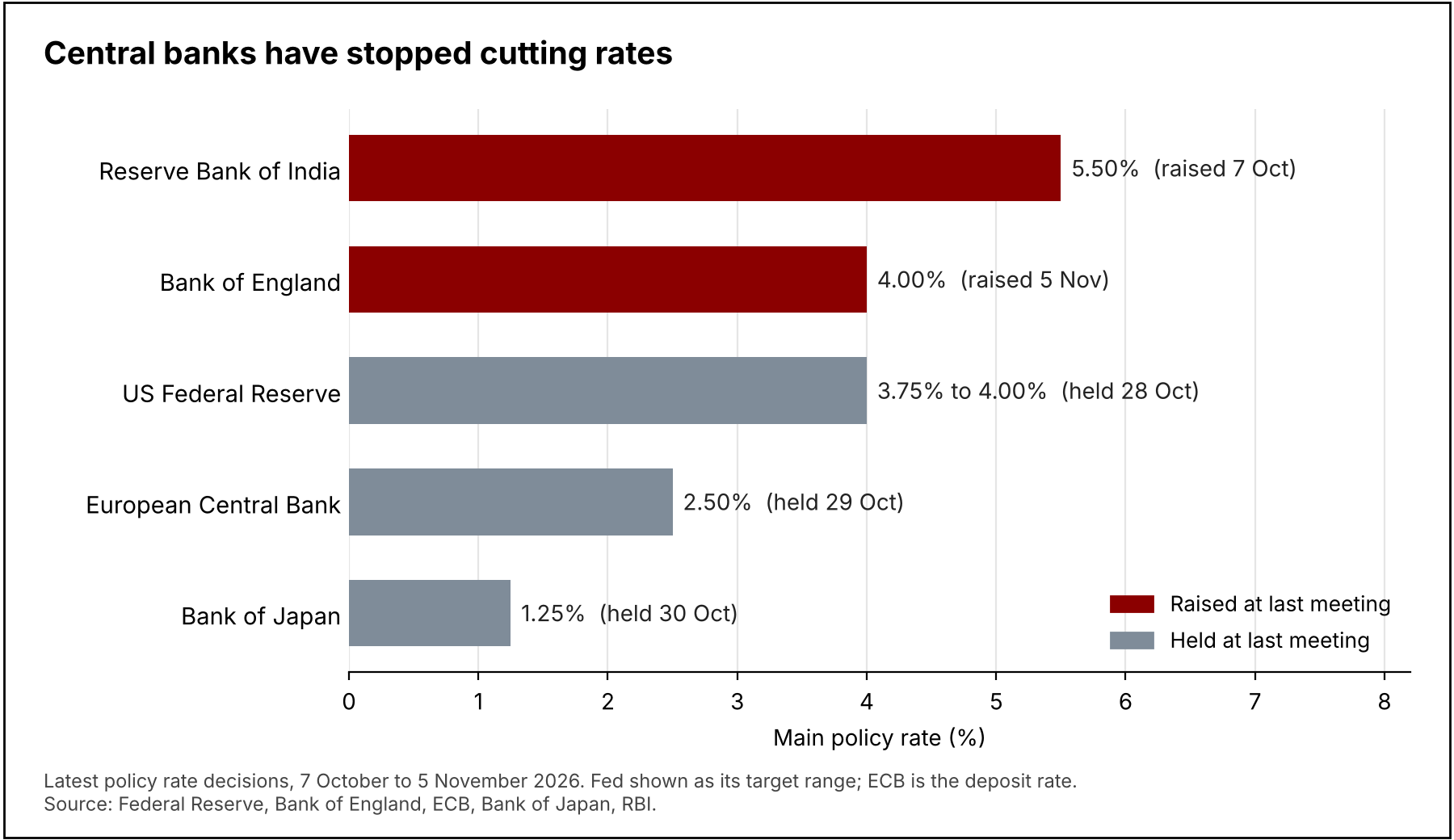
The clearest sign came from the US. Minutes of the Federal Reserve’s 27–28 October meeting, released on 18 November, showed that nearly all officials expect a rate rise in December (Federal Reserve). The Fed held rates at 3.75–4% in a 10–2 vote, and both dissenters, Lisa Cook and Beth Hammack, wanted a quarter-point rise straight away. A couple of officials said a rise of more than a quarter point could be considered if inflation data disappoint. For markets, the question for the Fed’s 8–9 December meeting is now how big the rise will be, not whether it comes (TheStreet).
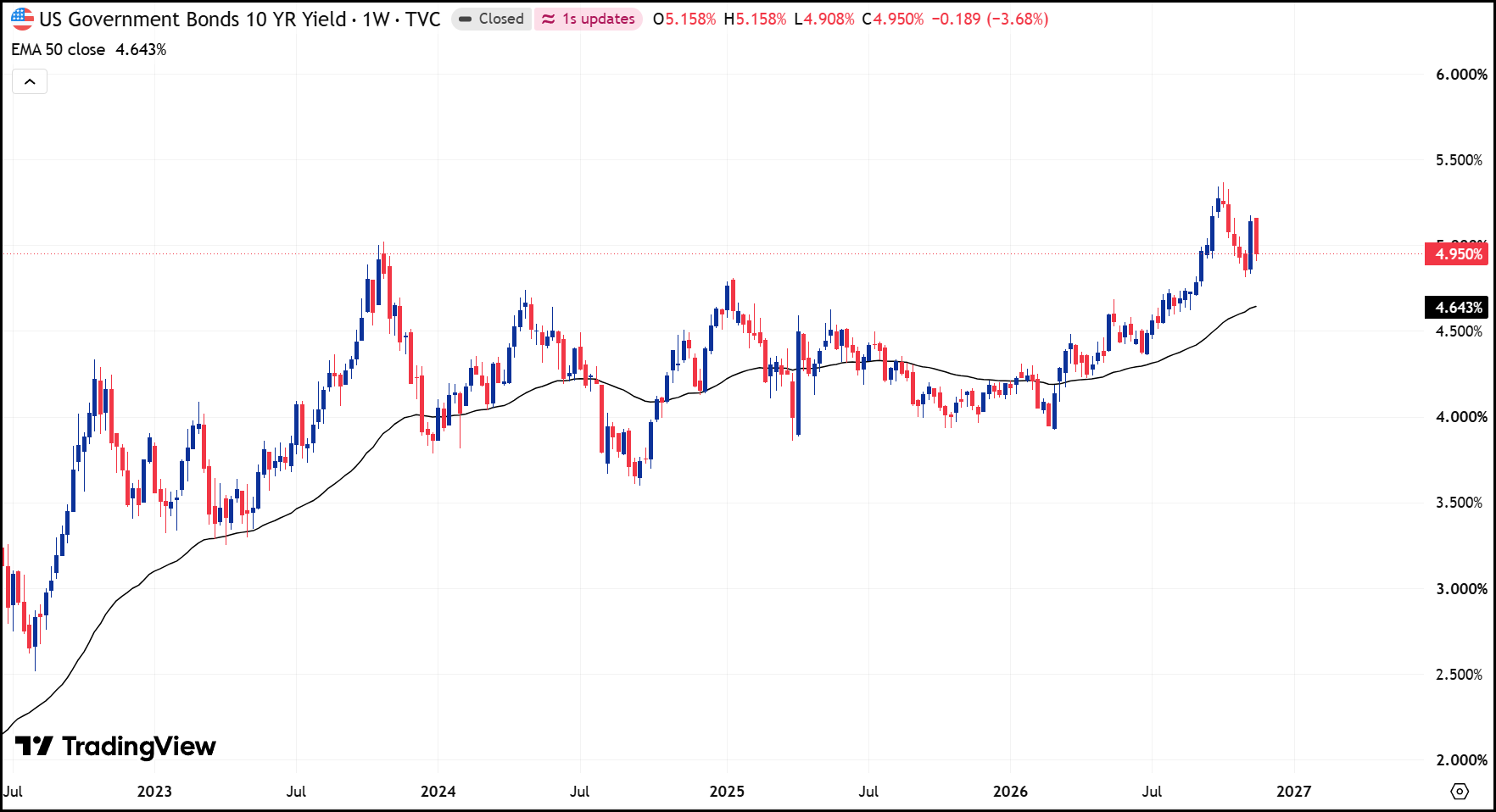
Bond markets have swung too. The US 10-year Treasury yield touched 5.34% on 1 October, its highest since 2002 (Wall Street Journal). It then fell back as a sell-off in technology shares sent investors into government bonds, ending October at 4.91% (Tradeweb). French yields went the other way, pushed up by worries over France’s public finances, a reminder that government debt can move yields as much as growth does.
The US 10-year yield is still close to 5%
Energy is still the wild card. On 18 November, Brent crude fell 1.3% to $91.95 a barrel after US crude stocks rose by 3.4 million barrels, far more than expected (CNBC). Attacks on shipping near the Strait of Hormuz stopped prices falling further, and a serious supply disruption could send them back up quickly.
Central banks have responded in different ways. The Bank of England raised Bank Rate to 4% on 5 November, with UK inflation at 3.5% (Bank of England). The European Central Bank held its deposit rate at 2.5% on 29 October after raising it in June and September, warning that energy prices could push inflation up while dragging growth down (CNBC). The Bank of Japan held at 1.25% on 30 October (CNBC), and Japan’s economy has since shrunk at an annualised 0.1% in July–September, its first contraction in a year (Reuters).
Our read
This does not mean every central bank faces a long run of rate rises, and it does not confirm stagflation (high inflation alongside weak growth). It does show that central banks have far less room to support growth while inflation stays high. Higher rates help control prices but weigh on borrowing, spending and investment.
Why it matters for India
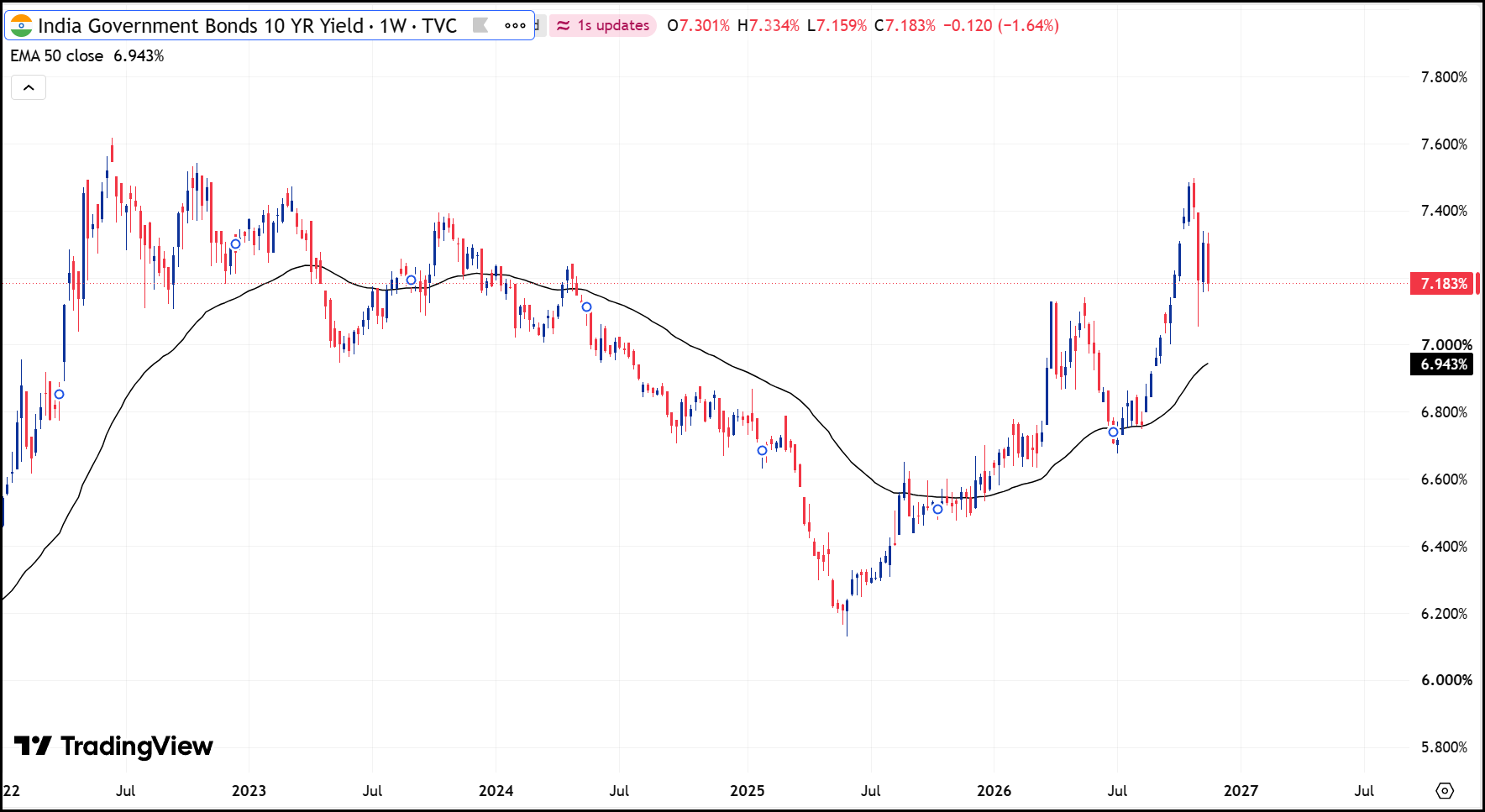
India faces the same squeeze. Retail inflation rose to 6.09% in October from 5.54% in September, above the RBI’s 6% upper limit, with food inflation at 8.94% (MoSPI). The RBI had already raised the repo rate by 25 basis points to 5.50% on 7 October, its first hike since 2023, and its next meeting runs from 2 to 4 December (RBI). Higher oil prices raise India’s import bill and weaken the rupee, while higher US rates can pull foreign money out. The RBI has to bring inflation down without choking growth.
India’s 10-year yield has climbed back above 7%
Federal Reserve, minutes of the 27–28 October FOMC meeting, 18 November 2026; TheStreet; Wall Street Journal; Tradeweb; CNBC, 29–30 October and 18 November 2026; Bank of England, 5 November 2026; Reuters; MoSPI, October CPI; RBI; TradingView (TVC data).
Published in Edition 02 (Sunday, 22 Nov 2026) on The Marginalia on Substack.