Why falling gold prices hurt gold lenders
On Friday, domestic gold prices slipped to around ₹1.25 lakh per 10 grams (Kotak Neo), roughly a third below their late-January peak of about ₹1.83 lakh (Daily Pioneer), and shares of gold-loan companies such as Muthoot Finance and Manappuram Finance fell as much as 4% (Kotak Neo). That looks puzzling at first: lenders earn interest, not profits from gold. The link is two basic credit ideas: loan-to-value (LTV) and collateral risk. Markets has more on the week’s fall in gold.
What is LTV?
The loan-to-value ratio compares the size of a loan with the value of the asset pledged against it:
LTV = (Loan amount ÷ Value of collateral) × 100
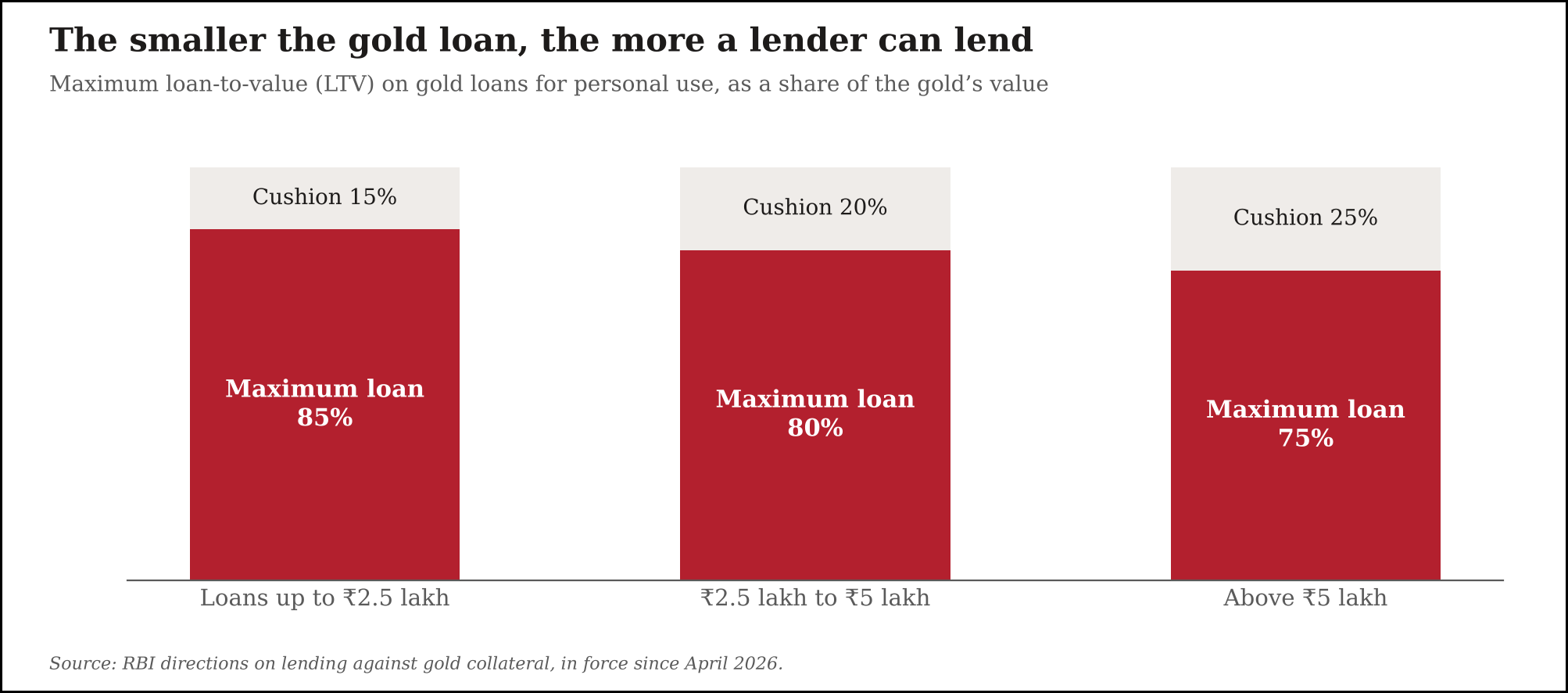
Under RBI rules in force since April 2026, gold loans for personal use can be at most 85% of the gold’s value for loans up to ₹2.5 lakh, 80% for ₹2.5–5 lakh, and 75% above ₹5 lakh. The remaining 15–25% is the lender’s safety cushion, there to absorb price swings and unpaid interest if a borrower defaults (RBI).
A worked example
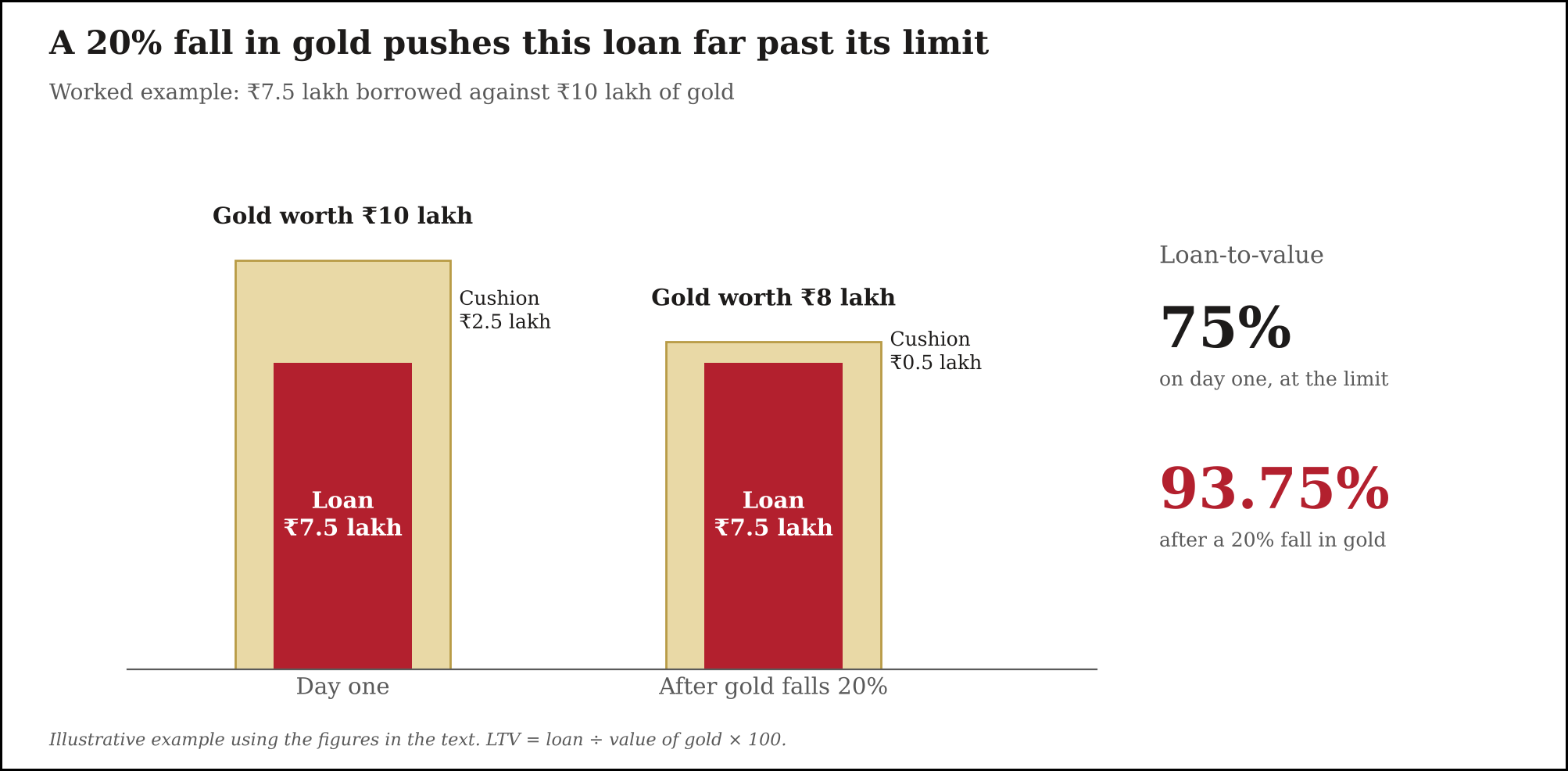
Lenders must keep within these limits for the whole life of the loan, not just on day one (RBI). Suppose a borrower pledges ₹10 lakh of gold and borrows ₹7.5 lakh, an LTV of 75%. If gold falls 20%, the gold is now worth ₹8 lakh, and the LTV jumps to 93.75% (₹7.5 lakh ÷ ₹8 lakh), far above the 75% limit.
That creates three problems for the lender:
- Margin calls and auctions: the lender asks the borrower to repay part of the loan or pledge more gold. If they cannot, the gold may be auctioned, often into a falling market.
- Strategic default: once the loan plus interest is close to the gold’s value, borrowers have less reason to repay.
- Slower growth: lower gold prices mean smaller new loans, so the lender’s loan book grows more slowly.
The takeaway
Collateral does not remove credit risk; it ties it to the price of the asset. When that price falls sharply, a “secured” loan book can lose its shine quickly.
Kotak Neo, 20 November 2026; Daily Pioneer, 19 November 2026; RBI directions on lending against gold and silver collateral, in force since 1 April 2026.
Published in Edition 02 (Sunday, 22 Nov 2026) on The Marginalia on Substack.